Pain Management Solutions: From Spine to Elbow Treatments
Explore proven pain management solutions for spine, joint, and elbow pain, covering causes, treatments, and paths to lasting relief.
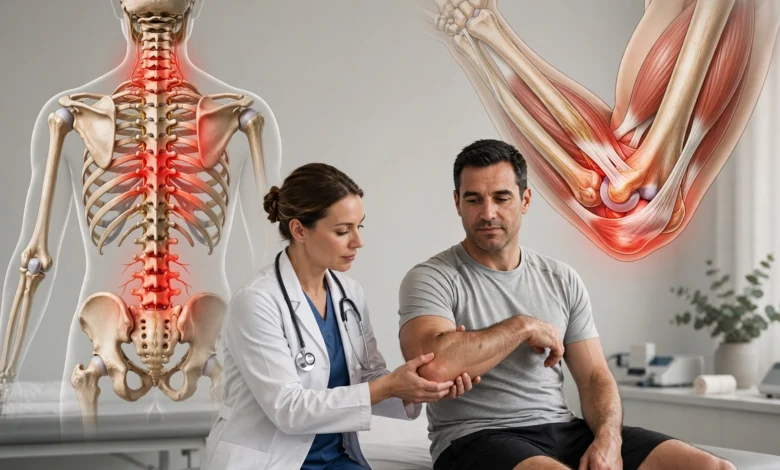
Pain management solutions have come a long way from “take two pills and rest.” Whether the discomfort starts in your lower back or flares up every time you swing a tennis racket, chronic pain affects how you move, work, and sleep. Millions of people deal with some form of persistent pain every year, and the frustrating part is that a single cause rarely explains it. A stiff spine can throw off your posture, which then strains your shoulder, which eventually shows up as elbow pain. That’s why effective pain management rarely comes from treating one joint in isolation.
This article walks through the most reliable, evidence-backed approaches used today, starting at the spine and working down to the elbow. You’ll find an honest look at conservative treatments like physical therapy and lifestyle changes, along with more advanced options such as interventional injections, regenerative medicine, and surgery for cases that don’t respond to anything else. The goal isn’t to hand you a generic list. It’s to help you understand what actually works, when it tends to work, and how to have a smarter conversation with your doctor or physical therapist about your specific situation. If you or someone you know is dealing with ongoing back pain, joint stiffness, or a nagging elbow injury, this guide should give you a clearer sense of where to start and what questions to ask next.
Understanding Chronic Pain and Why a Full-Body Approach Matters
Before jumping into treatments, it helps to understand why pain specialists rarely look at just one body part. The spine acts as the structural core of the body, and nerves that run through it branch out to the shoulders, arms, and hands. When something goes wrong in the spine, whether it’s a herniated disc, degenerative disc disease, or spinal stenosis, the resulting nerve irritation can radiate outward and cause symptoms that show up far from the actual source.
This is one reason pain management solutions are most effective when they’re built around a full diagnostic picture rather than a single complaint. A doctor evaluating elbow pain, for instance, might also check shoulder mobility and spinal alignment, because compensatory movement patterns often start upstream.
Common contributors to chronic pain include:
- Repetitive strain from work, sports, or daily habits
- Poor posture that places uneven load on the spine and joints
- Previous injuries that healed incompletely or changed how you move
- Degenerative conditions such as osteoarthritis or disc degeneration
- Inflammatory or autoimmune conditions like rheumatoid arthritis
- Nerve compression from a herniated disc or bone spur
Getting an accurate diagnosis is the real starting point. Imaging tools like X-rays, MRIs, and sometimes electromyography (EMG) help pinpoint whether pain is coming from a joint, a nerve, soft tissue, or a combination of the three.
Spine Pain: Where Many Pain Management Journeys Begin
Common Causes of Spine-Related Pain
Back and neck pain are among the most frequent reasons people seek out pain management solutions. The spine is a complex structure of vertebrae, discs, nerves, and muscles, and any one of those components can become a source of pain. Herniated discs, spinal stenosis, sciatica, and muscle strain are among the usual suspects, along with age-related wear and tear that gradually narrows disc space and irritates nearby nerves.
Conservative Spine Treatments
Most spine specialists start with the least invasive options first, since a large percentage of back pain improves without surgery. These typically include:
- Physical therapy to strengthen core and back muscles, improve flexibility, and correct posture
- Chiropractic care, which uses spinal adjustments to improve alignment and reduce nerve irritation
- Anti-inflammatory medication to reduce swelling and short-term discomfort
- Activity modification, such as adjusting how you lift, sit, or sleep
- Heat and cold therapy for acute flare-ups
According to the National Institute of Neurological Disorders and Stroke, most cases of low back pain improve within a few weeks with conservative care, though ongoing prevention habits matter just as much as the initial treatment.


Interventional Spine Pain Management
When conservative care isn’t enough, interventional pain management techniques offer a middle ground between medication and surgery. These are typically performed by pain specialists trained in minimally invasive procedures:
- Epidural steroid injections – deliver anti-inflammatory medication directly to irritated nerve roots
- Facet joint injections – target the small joints connecting vertebrae, often a source of chronic back stiffness
- Radiofrequency ablation – uses heat to disrupt pain signals from specific nerves, offering relief that can last months
- Spinal cord stimulation – for patients with persistent nerve pain who haven’t responded to other treatments
Surgical Options for Severe Spine Conditions
Surgery is generally reserved for cases involving significant nerve compression, structural instability, or pain that hasn’t responded to months of conservative and interventional care. Procedures like microdiscectomy, spinal fusion, and laminectomy are considered when there’s a clear structural problem that imaging confirms, not simply because pain has lasted a long time.
Shoulder and Joint Pain: The Connection Point
The shoulder often gets overlooked in conversations about pain management solutions, but it plays a critical role in linking spine mechanics to arm and elbow function. Rotator cuff injuries, impingement syndrome, and frozen shoulder are common conditions that, left untreated, can change how you use your arm and eventually contribute to elbow strain.
Treatment for shoulder-related joint pain tends to follow a similar conservative-first pathway: physical therapy, targeted stretching, activity modification, and anti-inflammatory approaches before considering corticosteroid injections or surgical repair for more serious tears.
Elbow Pain: Causes, Diagnosis, and Treatment Options
Why the Elbow Is Prone to Pain
The elbow is a hinge joint where the humerus meets the radius and ulna, allowing the arm to bend, extend, and rotate. Despite not being a weight-bearing joint, it’s under near-constant use, which makes it vulnerable to repetitive strain injuries. Elbow pain frequently stems from overuse conditions such as lateral epicondylitis (commonly called tennis elbow) and medial epicondylitis (golfer’s elbow), as well as arthritis, nerve entrapment, and ligament injuries.
Diagnosing Elbow Pain
An accurate diagnosis usually involves a physical exam checking grip strength, range of motion, and pain response to specific movements. When needed, doctors add imaging such as X-rays or MRIs to rule out fractures or degenerative changes, and electromyography to assess nerve involvement. Catching the issue early tends to make pain management far more straightforward, since chronic tendon damage takes longer to heal than an acute strain.
Conservative Elbow Pain Treatments
For most patients, elbow pain responds well to non-surgical care:
- Rest and activity modification – reducing the repetitive motion that triggers symptoms
- Physical therapy – strengthening forearm muscles and improving flexibility around the joint
- Bracing or splinting – reducing strain on the tendon during daily activities
- Ice therapy – helpful for acute inflammation
- Nonsteroidal anti-inflammatory drugs (NSAIDs) – for short-term symptom relief
Advanced and Regenerative Elbow Treatments
When conservative approaches don’t fully resolve symptoms, more advanced pain management solutions are available:
- Corticosteroid injections for short-term inflammation control
- Platelet-rich plasma (PRP) therapy, which uses a concentrate from the patient’s own blood to support tendon healing
- Minimally invasive tenotomy procedures, which remove damaged tendon tissue using ultrasound guidance
- Peptide therapy, an emerging option some clinicians use to support tissue repair
Surgery is typically considered only after these options have been tried, and is reserved for severe tendon tears, persistent nerve entrapment, or advanced arthritis that limits daily function.
Comparing Non-Surgical and Surgical Pain Management
Deciding between conservative care and surgical intervention depends on several factors, including how long the pain has lasted, its severity, and how well it responds to initial treatment.
Non-surgical pain management is generally appropriate when:
- Pain is mild to moderate
- Imaging doesn’t show significant structural damage
- Symptoms are recent or intermittent
- The patient hasn’t yet tried physical therapy or activity changes
Surgical intervention becomes more relevant when:
- Pain persists after 6–12 months of conservative treatment
- Imaging confirms a structural issue such as a torn tendon or herniated disc
- There’s progressive weakness, numbness, or loss of function
- Nerve compression is significant and worsening
Most pain specialists agree that starting conservative and escalating gradually leads to better long-term outcomes and avoids unnecessary procedures. The Mayo Clinic’s guidance on chronic pain reinforces that a stepped, individualized approach tends to produce the most sustainable results.
Lifestyle Habits That Support Long-Term Pain Relief
Medical treatment is only part of the picture. Daily habits play a real role in how well any pain management plan holds up over time.
- Maintain good posture, especially if you sit at a desk for long stretches
- Stay consistent with strengthening exercises, even after pain improves, since muscle support protects joints from re-injury
- Warm up before repetitive activities like sports, gardening, or manual labor
- Manage your weight, since excess load on the spine and lower joints accelerates wear
- Take breaks from repetitive motions, particularly gripping or typing tasks that strain the elbow
- Sleep in a supportive position that keeps the spine neutral
None of these replace professional care, but they meaningfully reduce the chances of flare-ups once you’ve found relief.
When to See a Pain Management Specialist
Not every ache needs a specialist visit, but certain signs suggest it’s time to get evaluated rather than wait it out:
- Pain that persists beyond a few weeks despite rest and home care
- Numbness, tingling, or weakness in the arms or legs
- Pain that disrupts sleep or daily function
- Swelling, redness, or warmth around a joint
- A history of injury that hasn’t fully healed
A pain management specialist can coordinate imaging, physical therapy referrals, and interventional or surgical options as needed, rather than leaving you to guess which treatment path fits your situation.
Conclusion
Effective pain management solutions rarely come from a single fix. Whether the problem starts in the spine and radiates outward, or begins as a localized issue like tennis elbow, the most reliable path to relief usually starts conservatively, with physical therapy, activity changes, and targeted exercises, before moving toward interventional treatments like injections or regenerative therapies, and finally surgery when structural damage requires it. Understanding how the spine, shoulder, and elbow work together, getting an accurate diagnosis early, and staying consistent with supportive habits like posture and strength training all make a measurable difference in long-term outcomes. If pain has been part of your daily routine for weeks or months, talking to a specialist who can evaluate the full picture, not just the joint that hurts most, is often the fastest way to actual, lasting relief.